
Why Runners Get Knee Pain (And How to Prevent It)
Running is one of the easiest and healthiest forms of exercise. Whether you're training for your first 5K or your tenth marathon, running improves cardiovascular health, strengthens bones, and boosts mental health.
Unfortunately, it also comes with a downside.
Research shows that 25-30% of all running-related injuries occur at the knee, making it the most commonly injured joint in runners. The good news? Many of these injuries are preventable.
What Causes Running Knee Injuries?
A recent systematic review analyzed 20 different studies involving endurance runners to identify what consistently increases the risk of knee injuries. Instead of finding one single cause, researchers discovered that knee pain usually develops from multiple factors working together.
The three biggest risk factors were:
- Previous knee or running injury
- Training too much or progressing too quickly
- Biomechanical factors (how your body moves while running)
The Biggest Predictor: Previous Injury
One of the strongest findings from the review was that runners who had been injured before were much more likely to get injured again.
Why?
After an injury, many runners return to training before they've fully recovered. Even if the pain is gone, there may still be:
- Muscle weakness
- Poor balance
- Reduced flexibility
- Changes in running mechanics
- Decreased shock absorption
Without addressing these issues, the body often compensates, increasing stress on other joints and tissues.
More Miles Isn't Always Better
Many runners believe that more training automatically leads to better performance.
Not necessarily.
The review found that rapid increases in weekly mileage, longer training hours, and higher overall training loads consistently increased the risk of knee injuries.
Your body needs time to adapt.
When muscles, tendons, and joints don't have enough recovery time, repetitive stress begins to build faster than your body can repair it.
This is when overuse injuries begin to develop.
Running Form Matters
Researchers also found that movement patterns can influence injury risk.
Some runners demonstrated:
- Increased pelvic tilt
- Poor hip control
- Excessive trunk lean
- Abnormal knee loading
- Reduced shock absorption
These movement patterns may place additional stress on structures around the knee, especially during longer runs.
It's important to remember that there is no single "perfect" running form.
Instead, the goal is to identify movement patterns that may be contributing to your specific pain.
Common Running Knee Injuries
The review highlighted three conditions that occur most often.
Patellofemoral Pain Syndrome (Runner's Knee)
Often felt around or behind the kneecap.
Pain usually worsens with:
- Running hills
- Stairs
- Squatting
- Sitting for long periods
Contributors include poor hip strength, altered mechanics, and training errors.
Iliotibial Band Syndrome (IT Band Syndrome)
Pain develops on the outside of the knee.
This condition is commonly associated with:
- Increased training volume
- Hip and pelvic control deficits
- Running biomechanics
- Previous injury history
Patellar Tendinopathy (Jumper's Knee)
Pain occurs just below the kneecap where the patellar tendon attaches.
Risk increases with:
- High training volume
- Tight hamstrings
- Previous knee injury
- Poor load management
How Occupational Therapy Can Help
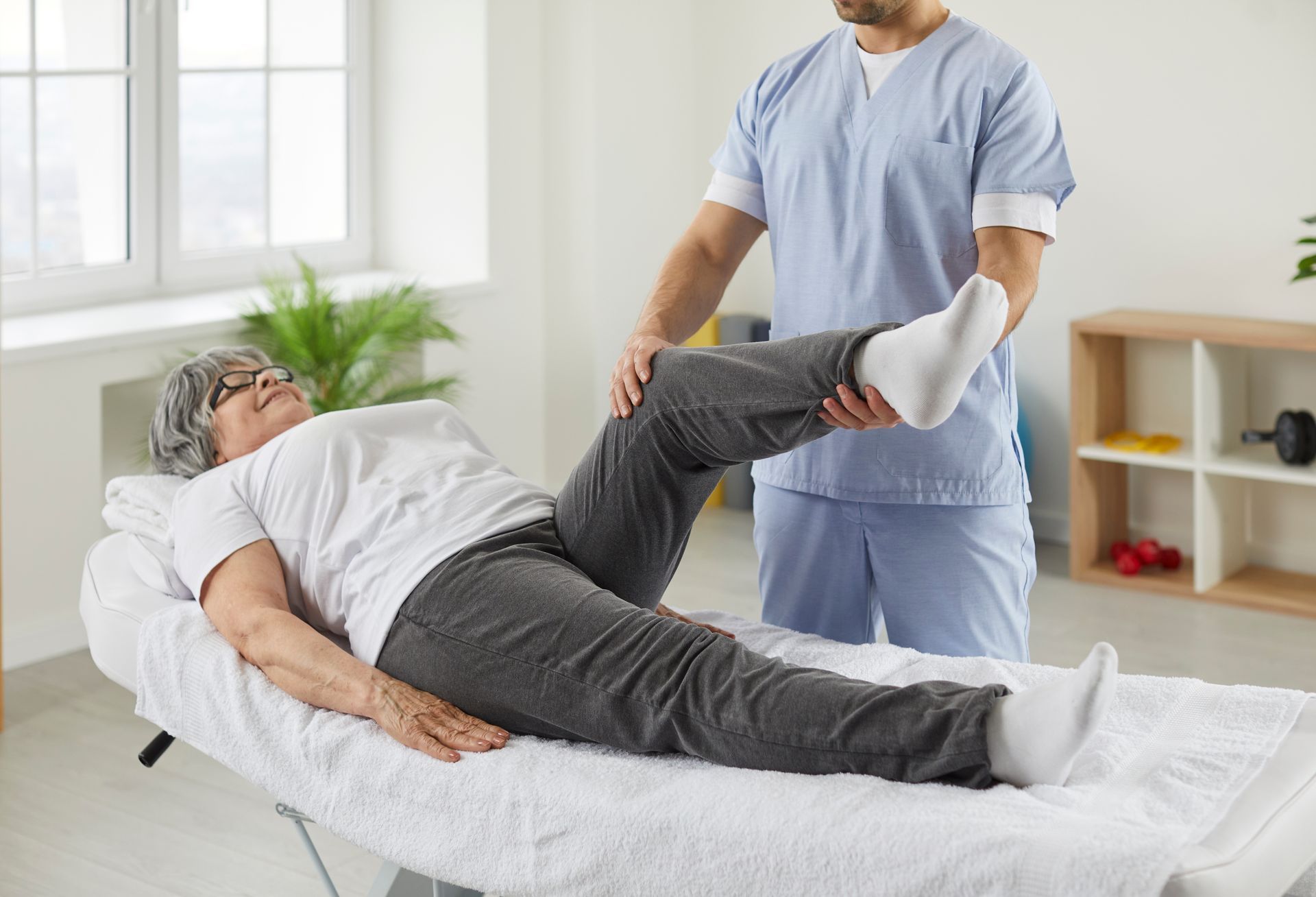
At Thrive Sports & Spine, occupational therapy focuses on helping runners return to the activities they love.
Treatment may include:
- Strengthening weak hips and legs
- Improving flexibility and mobility
- Addressing balance and stability deficits
- Correcting movement patterns during functional activities
- Building a gradual return-to-running program
- Reducing pain while improving performance
Rather than simply treating symptoms, we work to identify why the injury developed in the first place.
Chiropractic Care Can Improve Movement
Restricted joints can alter the way forces travel through the body while running.
Our chiropractors evaluate spinal, pelvic, and lower-extremity mobility to help restore efficient movement and reduce unnecessary stress on the knees.
Acupuncture Can Help Manage Pain
For runners dealing with persistent soreness or overuse injuries, acupuncture may help:
- Reduce pain
- Decrease muscle tension
- Promote relaxation
- Support recovery between training sessions
Prevention Is Better Than Recovery
The biggest lesson from this review is that most running injuries don't happen because of one bad run.
Instead, they develop gradually through a combination of previous injury, excessive training, and movement patterns over time.
If you're preparing for a race—or simply enjoy running for fitness—taking the time to improve strength, mobility, and recovery can help keep you healthy for miles to come.
Ready to Keep Running Pain-Free?
Whether you're training for your next marathon or just getting started, our multidisciplinary team can help you move better, recover faster, and reduce your risk of injury.
From gait assessments and strength training to manual therapy and personalized rehabilitation, we'll build a plan that keeps you doing what you love.
Reference
Senthil, K., Whitaker, S., Goodloe, J., et al. (2026). Common Risk Factors for Knee Injuries in Runners: A Systematic Review. Orthopaedic Journal of Sports Medicine.